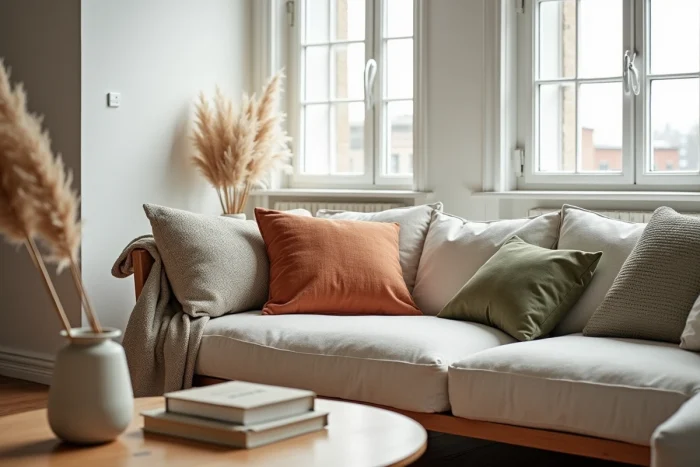
Decorating a home in your image relies less on the accumulation of trends than on the ability to translate personal preferences into concrete choices of colors, materials, and volumes. Each room functions as a system where light, furniture, and circulation influence each other.
Visualize your decor before renovations with AI tools
AI-assisted interior design applications have changed the way to prepare a layout project. Services like Ideal House allow you to import a photo of your room, select a style (modern, minimalist, farmhouse), and receive a layout proposal generated based on this. The main advantage lies in the speed: just a few seconds are enough to test an ambiance.
The Remodel AI app takes the logic further by offering to visualize a complete renovation from simple photos, including floors and walls. This type of tool allows you to compare several aesthetic directions without spending a single euro on renovations.
Other mobile applications, like MyEdit, allow you to virtually try out several decor atmospheres in the same room. The difference with a static moodboard on Pinterest is notable: you work on your own room, with your own constraints of volume and light. To explore layout ideas room by room, the home page of Vivez Décorez gathers concrete examples categorized by living space.
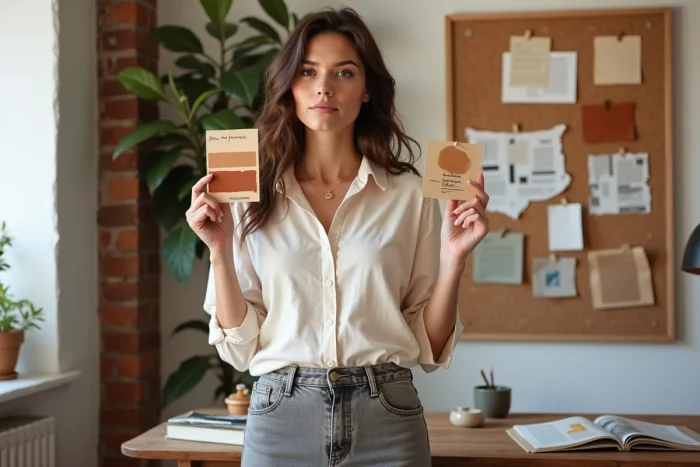
Color palette and materials: building coherence room by room
A coherent color palette is based on a simple principle: choose a dominant shade, a secondary shade, and an accent shade. The dominant covers large surfaces (walls, floor), the secondary dresses the main furniture, and the accent is reserved for accessories and textiles.
This framework avoids the common trap of accumulating “favorite” objects that, taken in isolation, are pleasing but create a disjointed whole. A deep blue sofa works in a living room with off-white walls and ochre cushions. The same sofa in a sage green living room with burgundy curtains produces a radically different effect.
Combining materials without overloading
A maximum of three materials per room is enough to create depth. Wood, metal, and textile form a classic trio. Wood, polished concrete, and linen play on a more raw register. The rule is not absolute, but it limits visual noise.
The choice of the dominant material influences the thermal perception of the room. Light wood and rattan visually warm up a north-facing space. Brushed metal and glass are better suited for rooms already bathed in natural light, where they bring clarity without weighing down the space.
Interior layout: circulation and proportions before decoration
Before choosing a piece of furniture, the priority question concerns circulation in the room. A minimum passage of seventy centimeters between two pieces of furniture ensures smooth movement. Below this threshold, the space appears cluttered regardless of the quality of the furniture.
Proportions play a role that decoration alone cannot correct. An oversized sofa in a small living room crushes the space, even with light colors on the walls. Conversely, furniture that is too small in a large living room creates an uncomfortable sense of emptiness.
- Measure the room and transfer the dimensions onto a plan (paper or app) before any furniture purchase
- Leave a clear space in front of windows to avoid blocking natural light
- Position seating face-to-face or in an L-shape to encourage conversation, rather than lined up against the walls
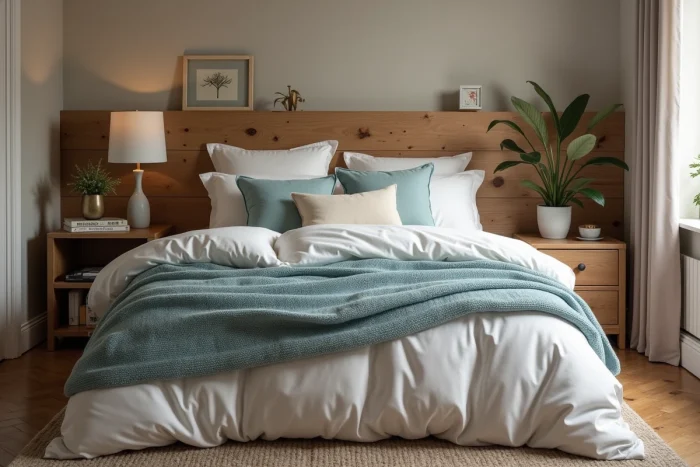
Adapting decoration to real life rhythms
An interior designed for magazine photos and an interior designed for living diverge on one precise point: resistance to use. Fragile materials in a home with children or pets generate daily frustration.
Removable and washable fabrics, matte surfaces that hide fingerprints, closed storage rather than open in high-traffic areas—all of these are technical as well as decorative choices. The most successful decoration is the one that withstands daily life without requiring constant maintenance.
Personalizing interior style: going beyond trend catalogs
Inspiration platforms (Houzz, Pinterest, Côté Maison) provide a starting point, but they guide towards popular and replicable choices. Creating a home in your image requires detaching from them at some point.
The HomeVibe app takes a different approach: it integrates questionnaires about color preferences, atmospheres, and lifestyle practices to generate proposals tailored to the user’s profile. The aim is a decoration guided by real habits, not by a seasonal trend.
- Identify objects already present in your home that provide real attachment, and build the decor around them
- Favor one or two unique elements (a handmade ceramic, an antique textile) rather than ten mass-produced accessories
- Accept that some pieces remain understated to allow the whole to breathe
A personal interior is not built in a single order. It evolves through successive additions, each new element dialoguing with the previous ones. The most accomplished spaces are often those that have taken several months, even years, to find their balance.
The final criterion remains the feeling experienced upon returning home. A space that resembles you is recognized by the comfort it provides even before one notices the decoration.