Most fillings do not freeze well, but some ingredients surprisingly withstand freezing quite well. Adding sauces or fresh vegetables to the bread can turn simple storage into a real food puzzle.
Food safety rules require adherence to specific durations and avoiding certain combinations to maintain texture and taste. However, an appropriate method allows for preparing ready-to-use portions in advance without sacrificing quality.
Why freezing triangle sandwiches can really simplify your life
When everything speeds up, preparing meals in advance becomes a remarkably effective solution to save time, limit urgency, and regain some flexibility in daily organization. The idea of freezing triangle sandwiches is gaining traction in households as well as among overwhelmed students or those juggling meetings during lunch breaks. Practically, this also means always having homemade snacks ready to enjoy.
With a few sandwiches already stored in the freezer, the race against time or the headache of an improvised lunch is over. Just take one or two out, let them thaw according to the available time, in the fridge or at room temperature, and bite into them without guilt. The temptation of industrial snacks fades, waste becomes minimal, and balance is within reach.
In terms of preservation, sandwich bread proves unbeatable, even after freezing. Ham, slices of Emmental or Comté, pre-cooked vegetables: these ingredients maintain their structure well if each portion is carefully wrapped. The texture does not turn into despair, and the taste holds strong.
Making several sandwiches at once to freeze some is also a good way to better manage your stocks and anticipate meals without ever sacrificing taste. No more wasting food or dealing with a half-empty fridge: this method allows you to make the most of leftovers and optimize shopping, in sync with your daily routine.
What ingredients and tips to prioritize for sandwiches that remain tasty after freezing?
The choice of bread is crucial. To ensure each triangle retains its shape and remains enjoyable to eat, opt for soft, dense sandwich bread cut evenly. Too rustic breads, baguettes, and whole grain breads tend to dry out or poorly withstand cold storage.
To successfully make your triangle sandwiches intended for freezing, some ingredients are more reliable than others. Here’s what is best to select:
- hard cheeses (like Emmental or Comté), which maintain their structure,
- thin slices of ham or chicken, easy to thaw,
- pre-cooked vegetables, such as well-drained grated carrots, peas, or grilled zucchini,
- just a bit of butter or cream cheese to form a discreet barrier against moisture.
Conversely, beetroot, raw tomatoes, or any ingredient very high in water should be excluded, as they make the bread soggy. Sauces (mayonnaise, vinaigrette) should be used sparingly to avoid a sandwich that is too soft after thawing.
Also, pay attention to the distribution of ingredients: the driest fillings placed in the center, sandwiched between layers of bread, will better protect the structure of the entire sandwich. This kind of detail makes a difference after thawing.
To preserve freshness, wrap each triangle individually in plastic wrap or a freezer bag, noting the date. Ideally, consume them within three to four weeks: beyond that, the texture starts to deteriorate, although safety remains assured.
Finally, it’s better to prefer classic, simple, and lightly filled recipes over very sophisticated combinations: here, simplicity guarantees success with every bite.
Key steps to prepare, wrap, and thaw your triangle sandwiches with peace of mind
Preparing sandwiches for freezing requires a minimum of attention: evenly distribute the filling on the sandwich bread, then cut into triangles as soon as preparation is complete. This tip makes the next steps easier, both for thawing and for quick eating.
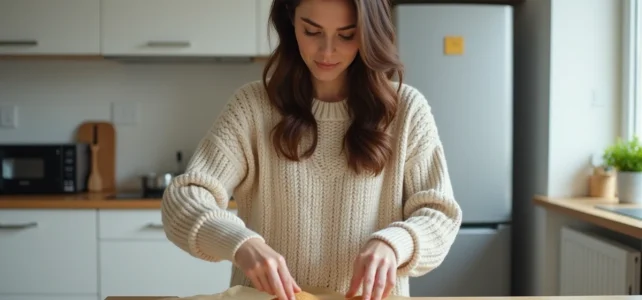
Wrapping plays its role. Wrap each sandwich in plastic wrap, squeezing out as much air as possible to avoid drying out and odor transfer. Then place them in a freezer bag or an insulated bag for better protection: no squished sandwiches, guaranteed softness.
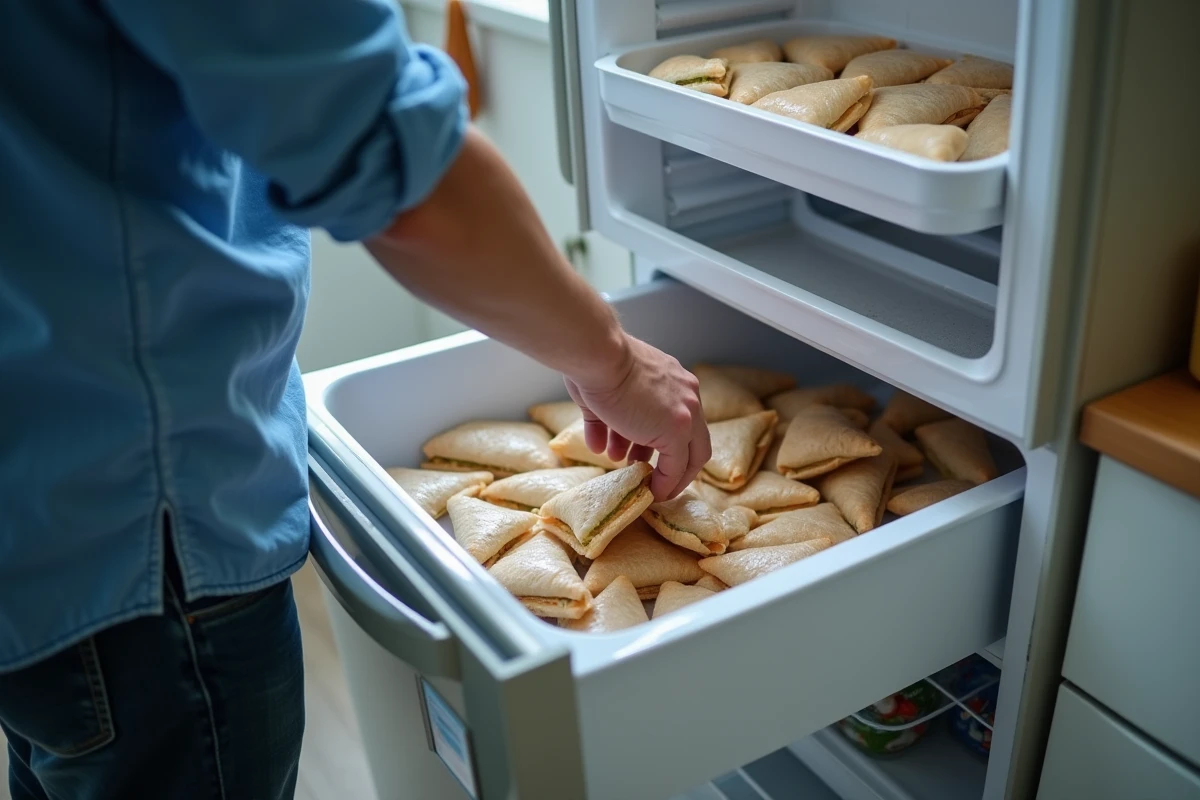
Remember to write the preparation date to respect the optimal period. Store them flat, without too much stacking, so the sandwiches maintain a good structure when taken out of the cold.
When the time comes, take your triangles out of the freezer and let them regain softness and flexibility gradually in the refrigerator, allowing for a night in the cool for the next day or a few hours at room temperature. For extra creaminess or a toasted touch, feel free to pop them in the toaster or on low heat in a pan for a few seconds.
Ready to be bitten into, these triangle sandwiches help forget the hustle and bustle of daily life and bring a bit of lightness to meal management, without sacrificing indulgence or practicality.