In France, the Ministry of National Education has included 3D printing in the list of digital skills to be acquired as early as middle school. However, some academies still lack suitable equipment. Despite this contrast, the number of institutions investing in this technology is increasing every year.
Initial feedback shows a rapid progression in usage, driven by teachers from various disciplines. Several local initiatives are already benefiting from the support of public or private institutions, and specific educational resources are emerging to accompany this evolution.
3D in School: A New Momentum for Learning
Step by step, 3D printing is making its way into French classrooms and energizing the way of learning. Middle schools, high schools, primary schools: additive manufacturing is finding its place well beyond technical labs. Now, this technology is infiltrating science classes, history, and even the arts. Knowledge takes on a new texture: more concrete, more immediate, accessible to all.
What is its major interest? Moving from abstract concepts to tangible objects in hand. Students no longer just imagine: they model, manipulate, and create their own models or molecules. Teachers are revising their tools, adapting their methods, and finding it easier to engage all their students. Differentiation becomes more vibrant, and personalized learning takes shape.
User-friendly FDM printers for institutions, sophisticated models for students in technical or university courses: 3D is taking root everywhere. It nurtures creativity, encourages cooperation across disciplines, and prepares young people for the diversity of future jobs, from industry to architecture, medicine, and design.
Each project places students at the heart of a dynamic: test, correct, retry. This spiral of trials solidifies their engagement and gives substance to what remained vague or theoretical. Gradually, 3D printing is establishing itself as one of the pillars of a more flexible, inclusive, and responsive school.
What Concrete Uses of 3D Printing Are Transforming Pedagogy?
The arrival of 3D printing is overturning classroom practices. A versatile tool, it allows teachers to shape resources exactly to their needs: tactile models for the visually impaired, molecular reconstructions for chemistry, realistic historical models for history. Uses are multiplying, opening up a field of possibilities.
To illustrate the concrete changes induced, here are some directly observable examples in institutions:
- In science, students manipulate 3D printed objects to explore what had previously been inaccessible: complex shapes, internal structures, simulations of organs or natural phenomena.
- In technological pathways, the revolution of 3D in education materializes: computer-aided design finds a direct extension with the creation of real prototypes, refined and adjusted by students’ hands.
- Mathematics comes to life. Students build solids and shapes themselves: geometry becomes tangible, dynamic, and less intimidating for those who usually struggle.
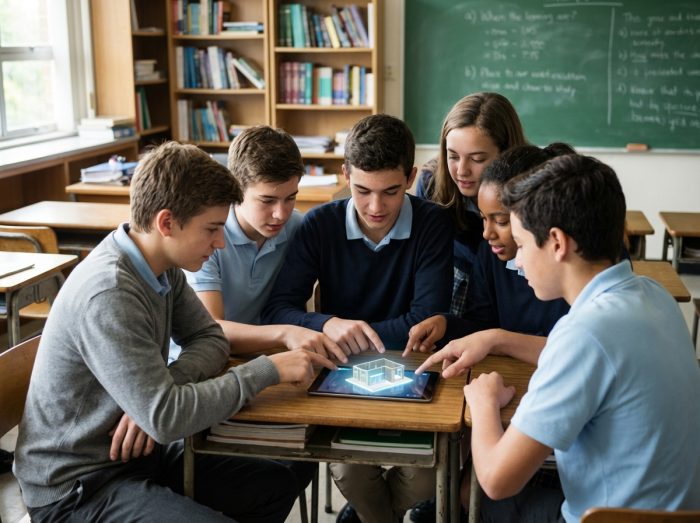
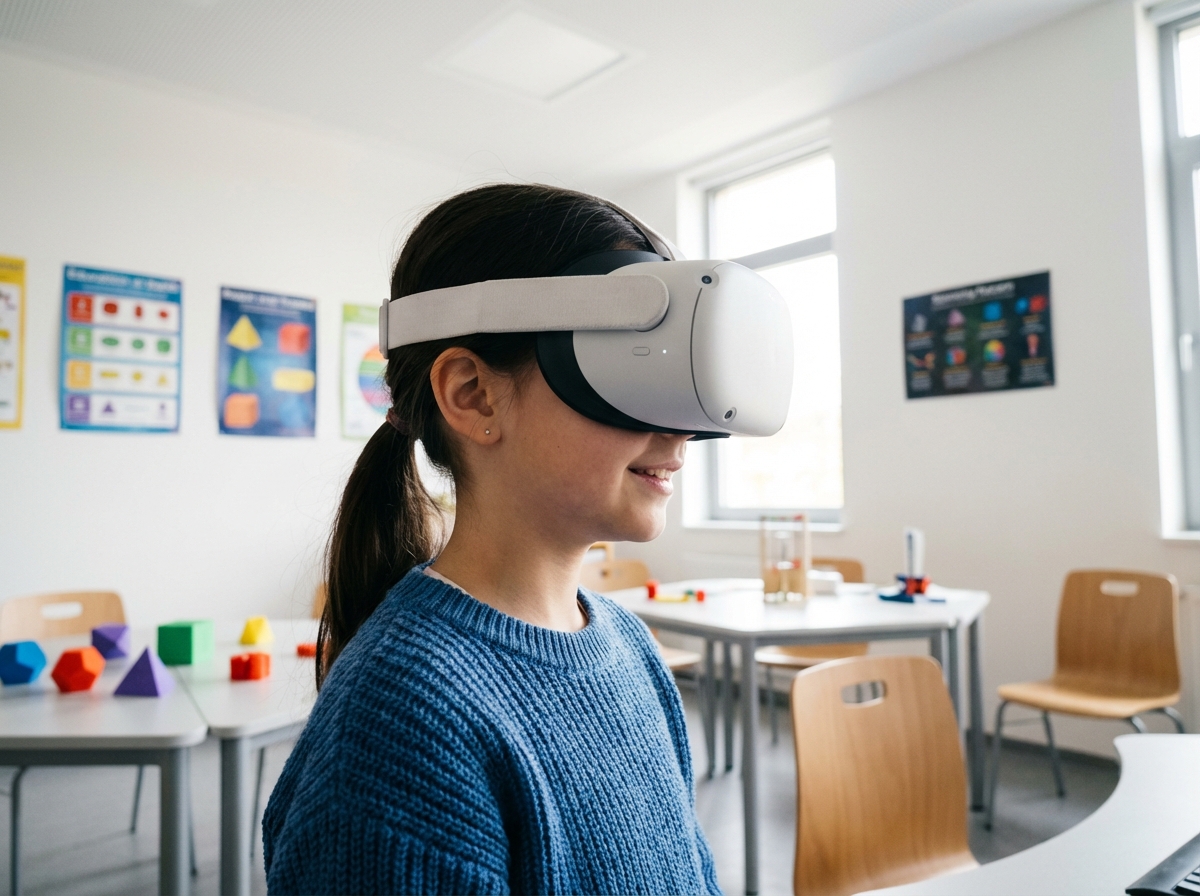
Pedagogical differentiation takes on a whole new dimension: each young person progresses at their own pace, personalizes printed objects, and develops their own digital and practical skills. 3D, combined with augmented reality or virtual spaces, bridges to architecture, biology, medicine, or design. More than a tool: a laboratory of ideas where everyone participates in creation.
Resources, Tips, and Feedback for Integrating 3D in the Classroom
Integrating 3D printing into the educational journey requires preparation, but support mechanisms are now plentiful. For example, MAIF is organizing a tour to promote this field among institutions. Across the Channel, the British National Education is investing in training and equipping schools, making the learning of additive manufacturing directly accessible from a young age. Universities, from Michigan to Padua, are laying the groundwork for teachers, focusing on 3D modeling and CAD, which are now part of initial training.
Numerous field reports converge: cooperation between disciplines is gaining momentum, and students are involved in the entire process, from design to production. School makerspaces are becoming places of emulation: teachers are improving their mastery of CAD tools, and the transition from theory to reality is becoming easier.
Want to get started? Here are some concrete ideas to begin on solid foundations:
- Look for grants or local assistance to establish the purchase and maintenance of equipment.
- Take advantage of workshops or training offered by universities or associations specializing in education and digital technology.
- Initially favor short-term projects, where each student participates, emphasizing the notion of collective success.
- Rely on peer feedback: exchanging experiences, pooling ideas and educational resources often helps accelerate the learning curve.
The personalization of teaching tools and attention to students with special needs are emerging as decisive advances. Feedback is clear: a renewed enthusiasm from both teachers and students, who are starting to experiment differently and collectively tackle new challenges. 3D is establishing itself, concretely, in classrooms: it is already a lever for innovation that goes far beyond mere technique.