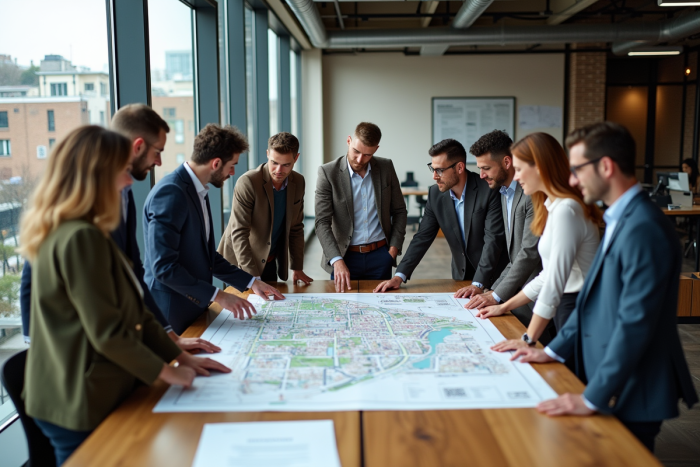
No law precisely outlines how two local authorities should coordinate their urban planning policies in the event of a merger. Yet, since 2010, the number of new municipalities has been steadily increasing, with consolidations involving both urban centers and isolated rural areas.
Local elected officials are trying to impose a common vision despite the diversity of interests, while some intercommunalities struggle to establish shared governance. This dynamic disrupts traditional management methods and forces a rethink of planning tools, risking the creation of new imbalances.
When urban merger redefines public action and territorial balances
The urban merger is not just a simple administrative assembly game. It reshuffles the cards of local power and presents territories with unexpected challenges. Cities and villages interlock into a mosaic where neighborhoods, suburbs, and peripheries seek their place in an expanded whole. In this excitement, the question of urban citizenship takes on a new dimension: how to make the voice of everyone heard when the common space expands and becomes more complex?
Public services must adapt to diversifying needs. Public transport, social housing, access to culture or health: each integration project becomes a true test for territorial solidarity. Debates are lively among elected officials, associations, and residents regarding the distribution of resources. The convergence between Orléans and Tours is emblematic of these tensions, but also of the hopes for shared innovation carried by alliances between metropolises, as detailed in the file “Understanding the convergence of Orléans and its technological challenges – Retbutiko”.
Urban planning must juggle sometimes contradictory ambitions. On one hand, attracting families and businesses through functional diversity and social diversity. On the other hand, avoiding the pitfalls of gentrification or segregation. Large housing estates, once showcases of proactive urban planning, are now at the center of complex renovation operations. In Lyon, Strasbourg, or Grenoble, the transformation of neighborhoods like ZUP and ZUS illustrates the difficulty of marrying innovation, urban memory, and openness to all.
This new balance is built with multiple voices. Citizen participation is essential in the design of mobility or the development of public spaces. Each actor tries to defend their vision of a plural city, in a context where the diversity of urban models fuels democratic debate, while sometimes sparking friction.
Third places, rural planning, and sustainable cities: what paths to invent the future?
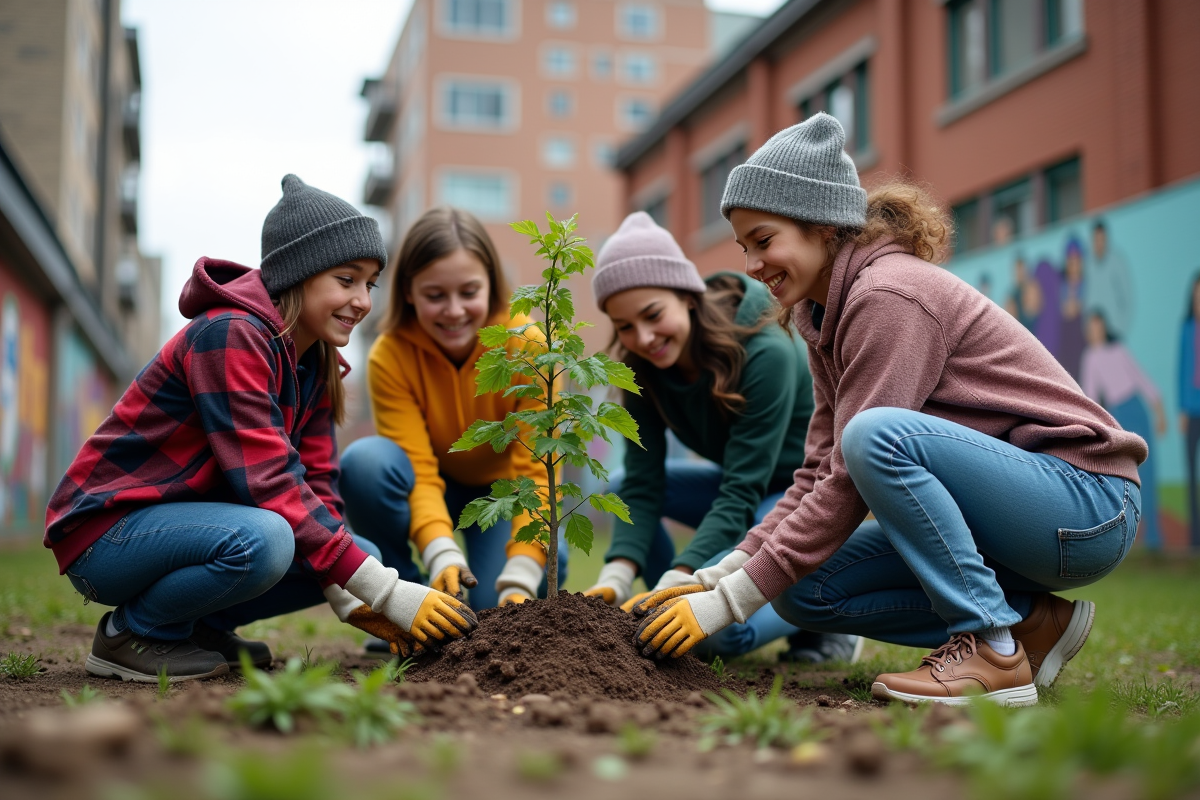
The urban merger is not exclusive to large cities. On the margins, other forms are emerging: third places, transformed industrial wastelands, revitalized town centers. These hybrid spaces become the playground for collectives, elected officials, and associations that reinvent the use of places. Here, digital intersects with craftsmanship; there, ecological transition materializes through local initiatives.
In the countryside, rural planning takes alternative paths. It adapts to the reality on the ground: population departures, dwindling public services, limited public transport. Yet, solutions are emerging, often discreet but effective, to maintain the vitality and attractiveness of these territories.
The sustainable city is built on this tension between limits and creativity. Renovations in Strasbourg, in the Neuhof district, show that it is possible to rehabilitate social housing, strengthen social diversity, and multiply shared spaces. Other examples, like La Duchère in Lyon or the Minguettes in Vénissieux, highlight the importance of green spaces, connections, and citizen engagement.
Some levers to think about the city of tomorrow:
To shape these ambitions, several paths are emerging:
- Develop third places to locally anchor social life and stimulate innovation
- Rehabilitate what already exists: housing, public spaces, vacant buildings
- Encourage functional diversity to mix housing, economic activities, and local services
- Take into account the challenges of climate change in every urban project
The transformation of territories relies on methods that prioritize consultation, experimentation, and adaptation to each context. Everywhere, French cities, as well as European or Asian ones, are meeting this challenge in their own way, finding a unique balance between heritage and novelty, sobriety and ambition.
What is at stake today is the collective ability to write a new chapter, where the urban future is not just an addition of territories, but the construction of a common project. The urban merger, far from being a simple procedure, then becomes the laboratory of a society in motion, seeking, experimenting, and sometimes inventing new horizons.